Mating Insights
Halter · 2026
Machine learning
Machine Learning
Field Research
Data Visualisation
I led the end-to-end redesign of Halter’s core mating experience, working across product, ML and farmer research to turn complex heat-model data into clear, time-sensitive breeding decisions.The resulting optimum insemination window gave farmers a simple, actionable view of when to breed each cow.
The challenge
Making sense of heat signals
Halter’s smart collars detect changes in cow behaviour, but farmers still need to interpret those signals to make breeding decisions.
Open app
During mating season, farmers have a narrow window to identify cows on heat and decide when to inseminate.
Turning data into confidence
The challenge was translating complex heat-model data into clear, actionable information that farmers could trust in the field.
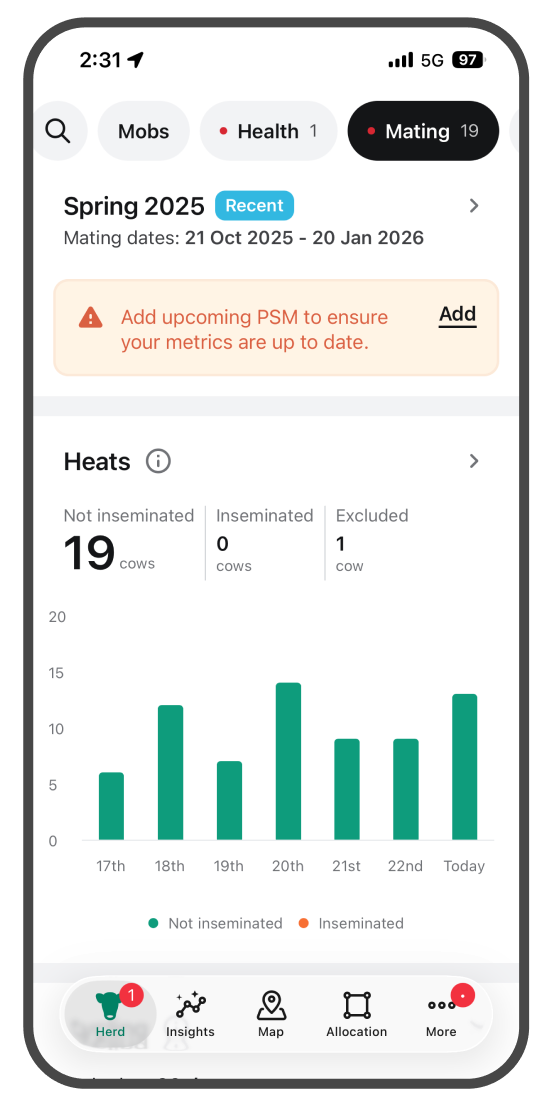
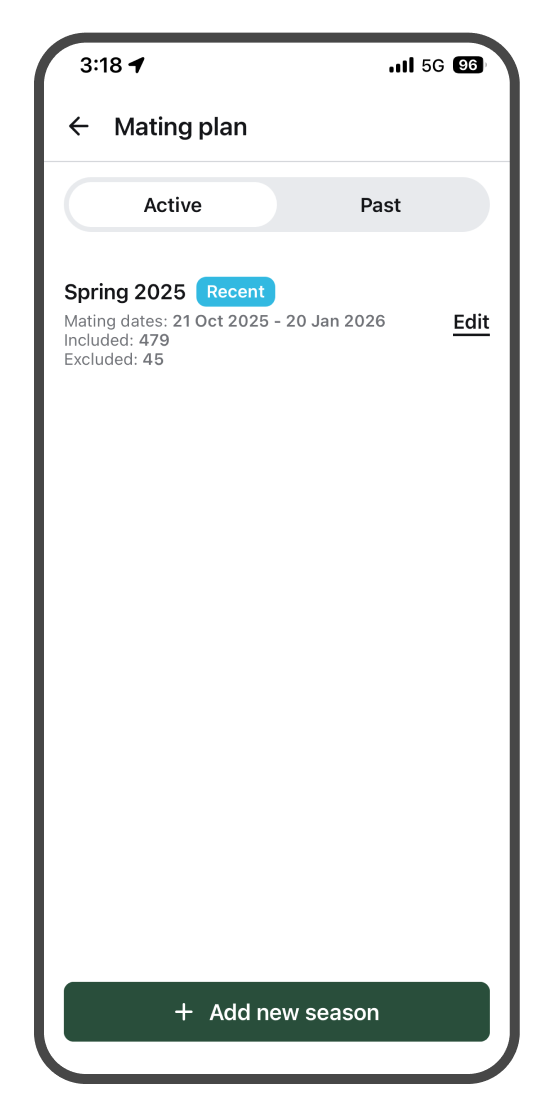
The Problem
The old Heat List made time-critical decisions harder
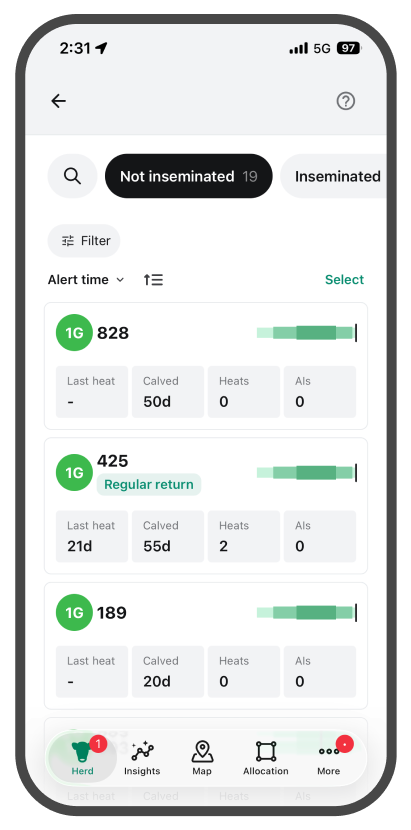
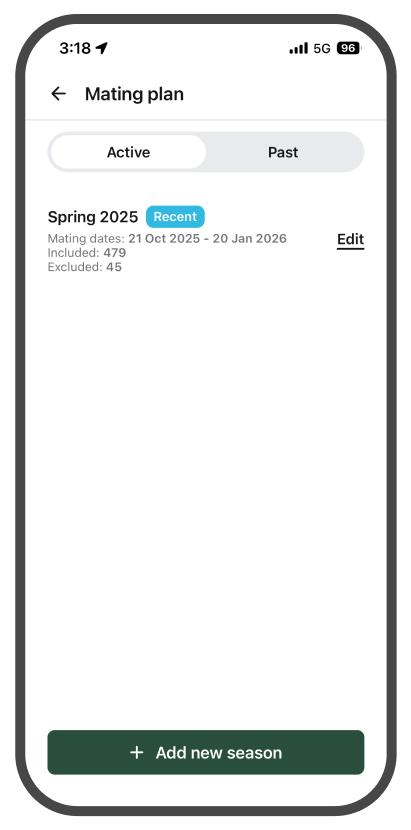
During peak mating season, farmers need to quickly identify cows ready for artificial insemination. However, the existing Heat List presented dense reproductive data without clearly showing when each cow should be inseminated.
Farmers had to interpret heat events and cross-reference information to determine the best time to act. The opportunity was to bring that timing guidance directly into the experience, making it easier to prioritise cows during busy mating periods.
9:41


Heats

B
34-3431

Since 4 ago

First AI

Conventional
Confidence
70%
Not submitted
7
1% of cows
Submitted
57
6% of cows

Filter
Not submitted


7 results
Peak

Pre
Pre
Pre
Pre
+ 2h
+ 12h
+ 16h
Heats
3
3
3
3
3
3
3
Last AI
21d
21d
21d
11d
21d
21d
21d
AI
1
1
1
1
1
1
1
Cow

M
2734
M
9845
M
4736
M
8734
M
5623
M
3456
M
4587
The Technology
What Makes Mating with Halter Possible?
Halter detects heat events by analysing continuous behavioural data captured by smart collars. Its machine-learning model identifies changes in activity associated with heat, operating at a false-positive rate of less than 1%.
This provided a reliable foundation for the redesign. My focus was on how to present these signals alongside insemination timing, so farmers could understand what the data meant for their cows.
A great detection model means little if the experience doesn’t meet farmers’ needs
Discovery & Field Research
Mapping mating season as it actually runs
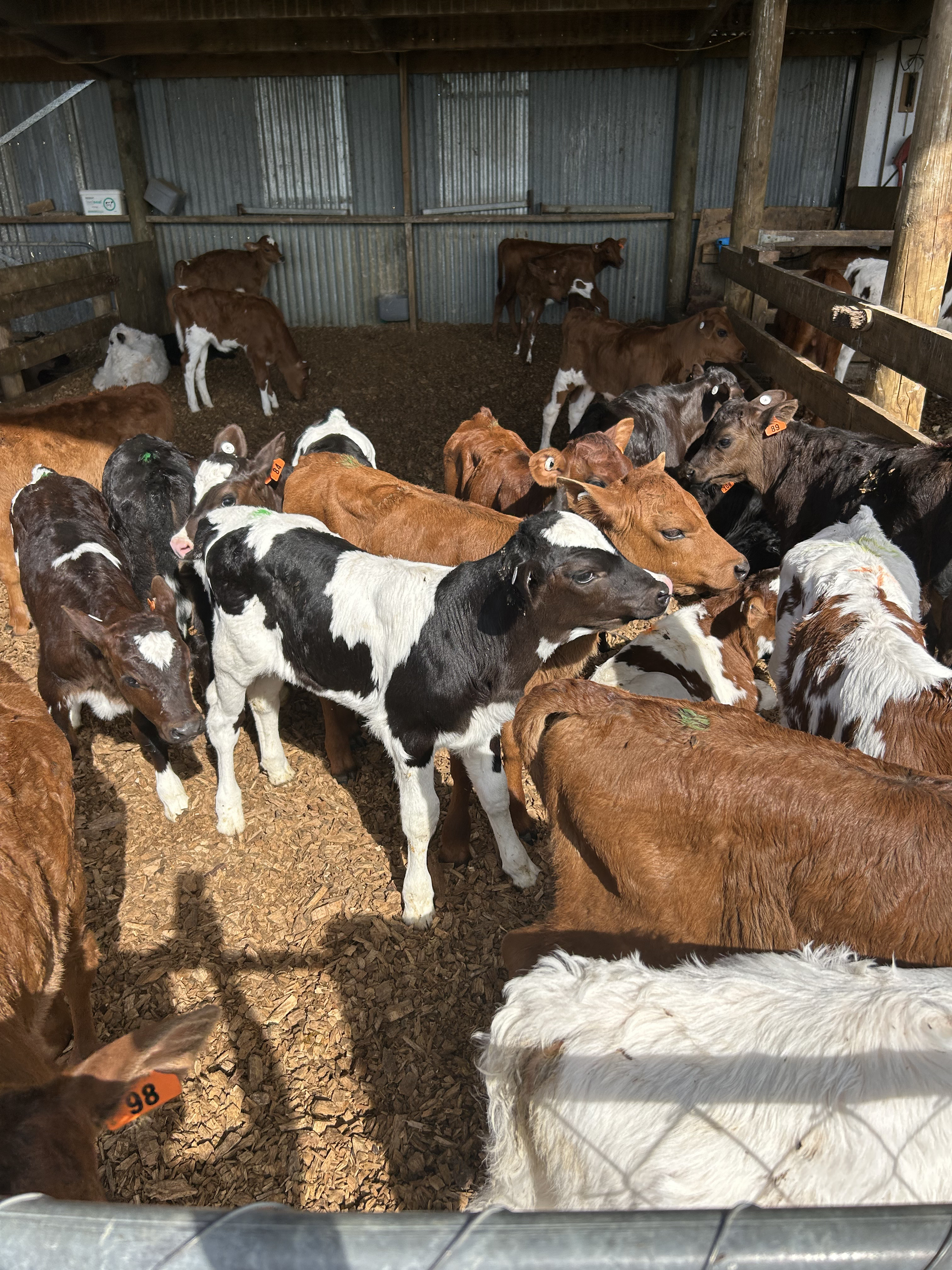
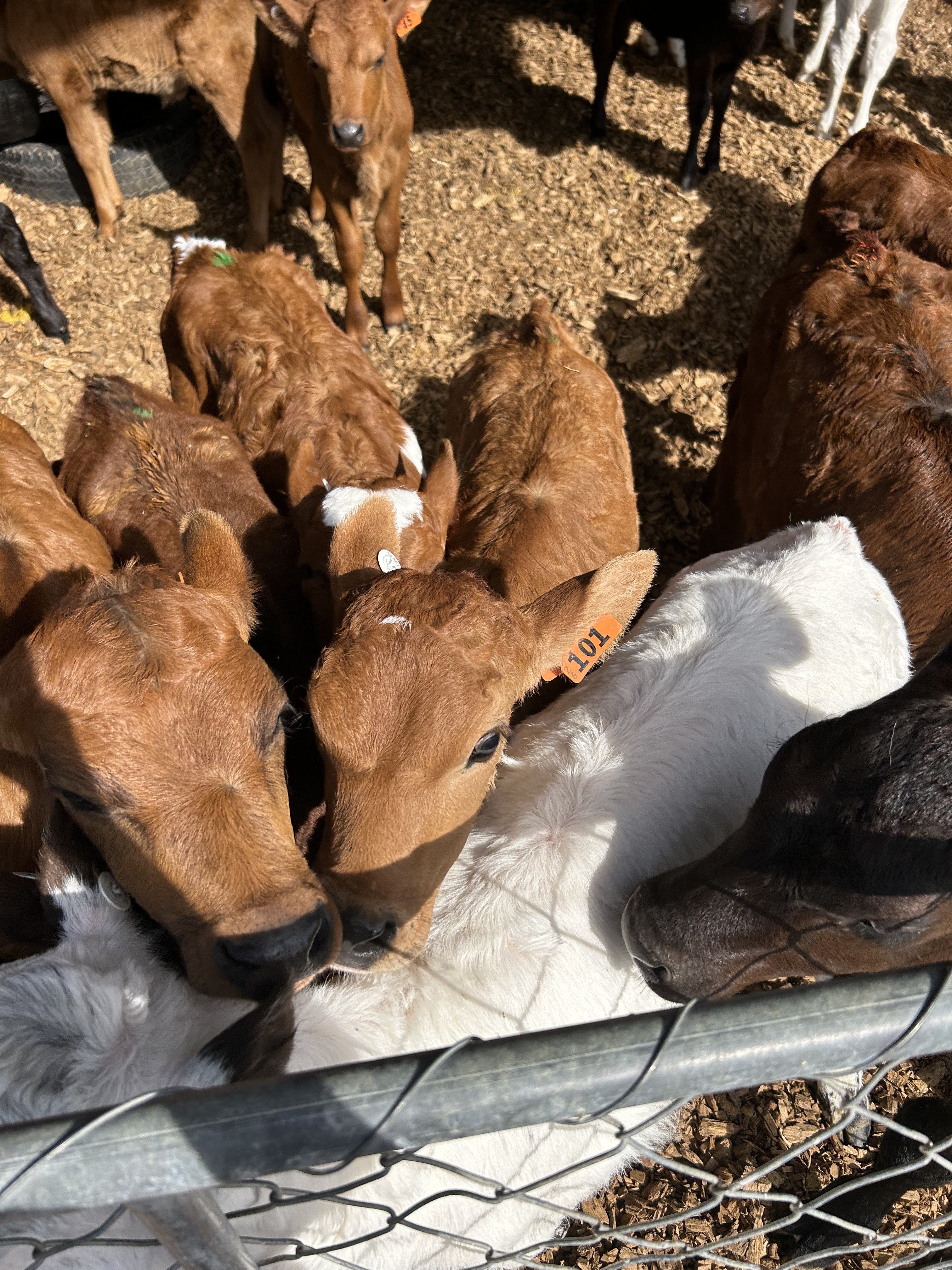
I spoke directly with dairy farmers through remote interviews and on-farm visits to understand how they managed mating season. I focused on their daily routines, the decisions they needed to make, and where the existing experience fell short.
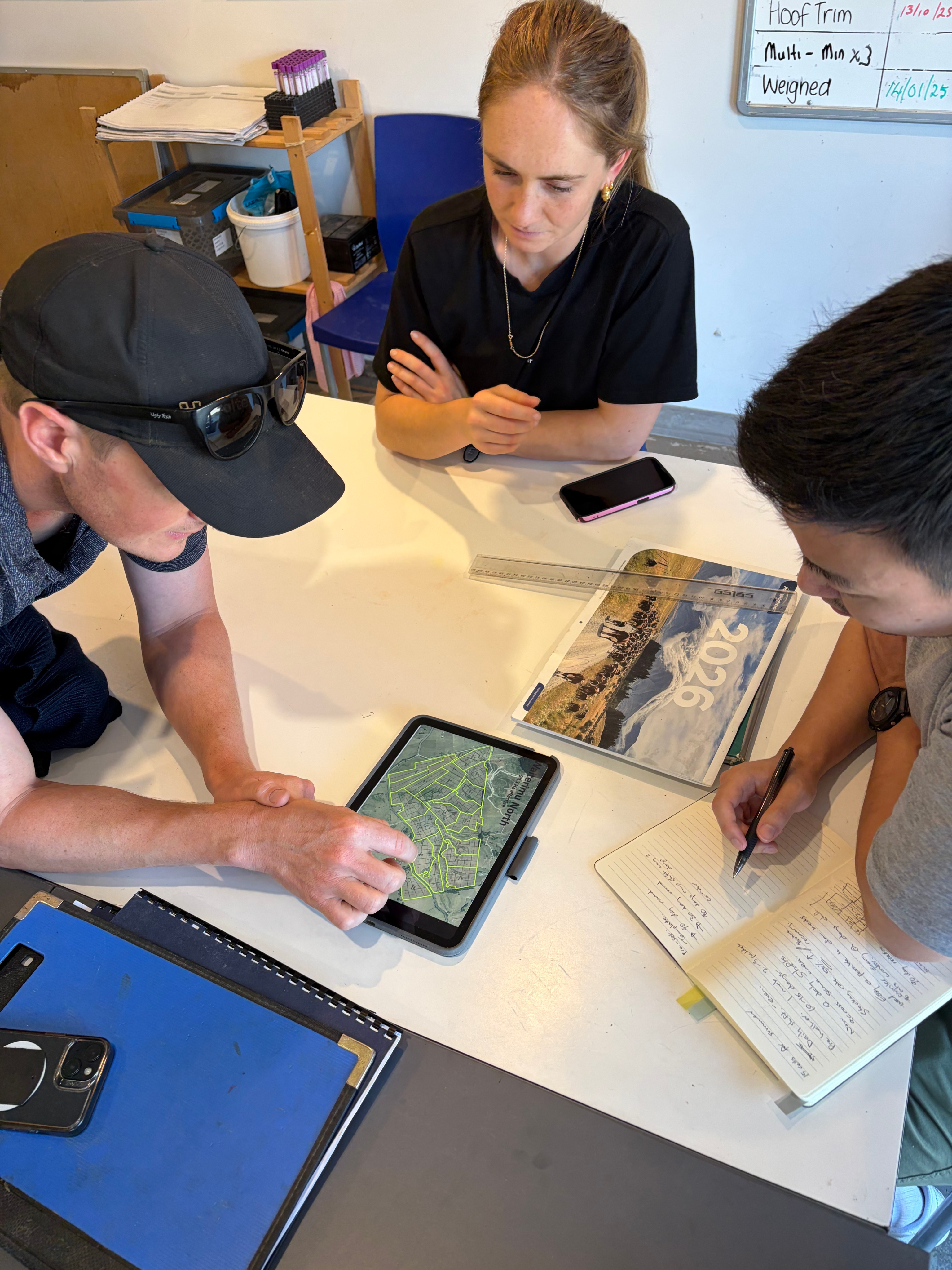
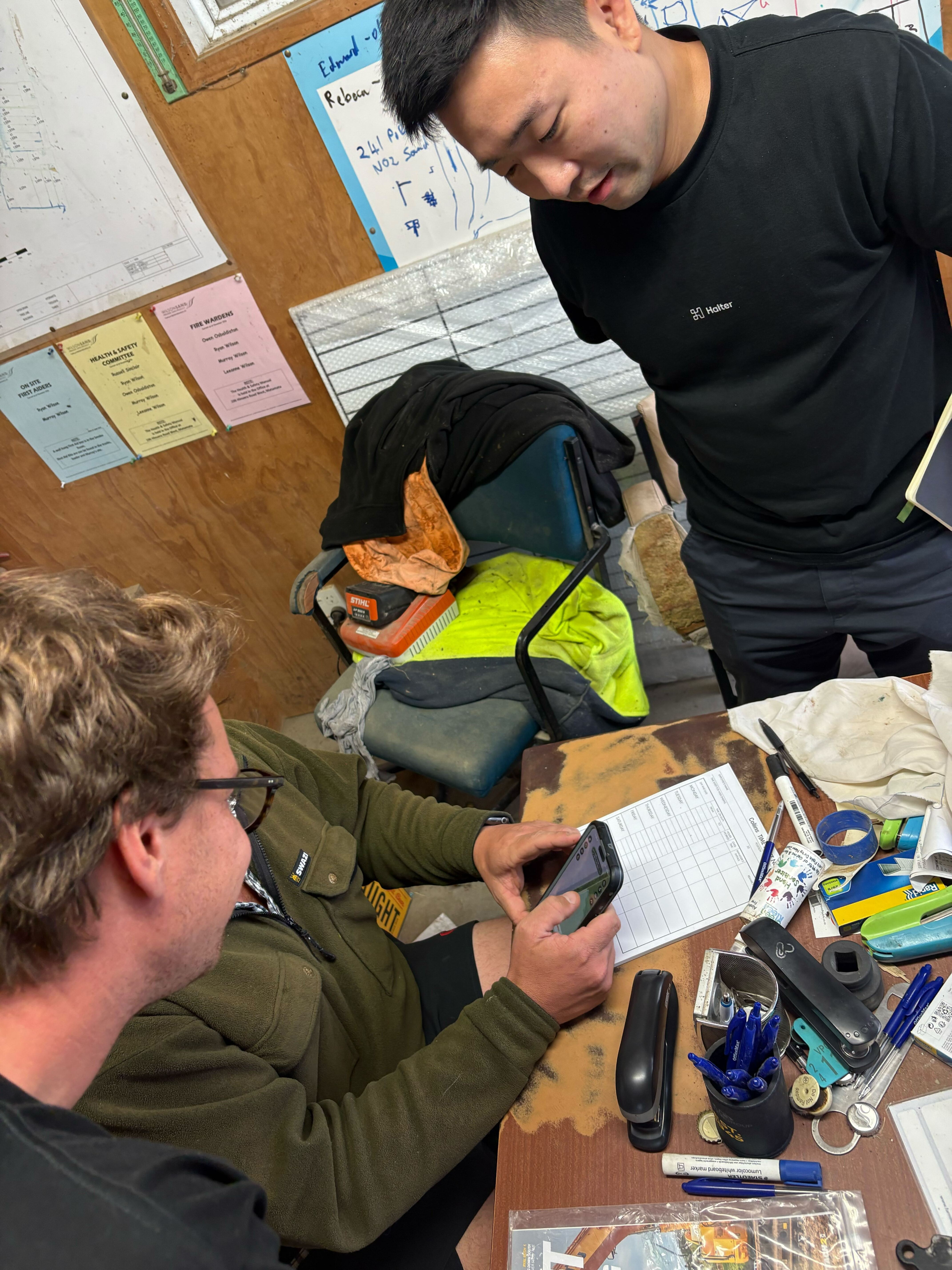
Farmers wanted more than just knowing when their cows were on heat.
They wanted to make their own decisions on when to inseminate.
Collaboration
Working with Behaviour and ML
That insight shaped my collaboration with the Behaviour and ML teams. Together, we explored how the heat model worked, what data was available, and how it could support farmers’ insemination decisions.
I used that understanding to explore different ways of visualising the insemination window, from linear progress bars to bell-curve distributions.
Cow activity
Mob avg.


Halter alert

Insemination window


0
6
12
18
24
30
36
42
48
Designs Informed by Testing
From multiple concepts to one clear bar
I tested different visualisations directly with farmers to understand which made the insemination window easiest to interpret.
The horizontal timing bar emerged as the strongest direction. It made the recommended insemination window easy to identify at a glance, while still showing the broader period in which farmers could act.
Best 12 hr
Best 24 hr
Insemination window


Heat window
Refining the Design
Refining the bar for real farm use
The bar had to show every insemination window and its likelihood of conception, while still encouraging farmers to act outside the best window when needed. Every window stays green, so none looks unsuitable. Size, not colour, tells them apart, and the optimum window is easy to spot without hiding the rest.
12pm
5pm
12am
12pm
5pm

7h
into heat

I continued refining the design through farmer feedback, sharing findings with the wider team as the design evolved. I also added clock times for each window and an “hours into heat” indicator, so farmers could see exactly where a cow was in her heat cycle without calculating the timing themselves.
Key Trade-off
Context vs. legibility in the field
The bar worked for a single cow, but farmers manage whole herds. The next challenge was the list around it: how much context to show per cow before the screen became unreadable in the field.
Before
The table showed heat counts and AI history, but not what farmers needed to decide: no optimum window, no heat interval, and no calving status.
Peak

Pre
Pre
Pre
Heats
3
3
3
Last AI
21d
21d
21d
AI
1
1
1
Cow

M
2734
M
9845
M
4736
After
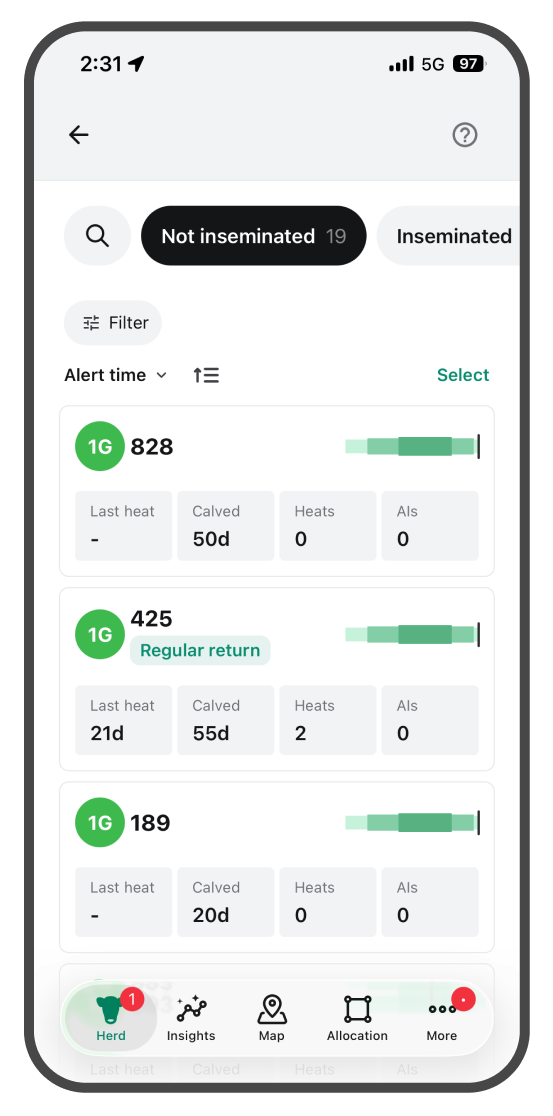
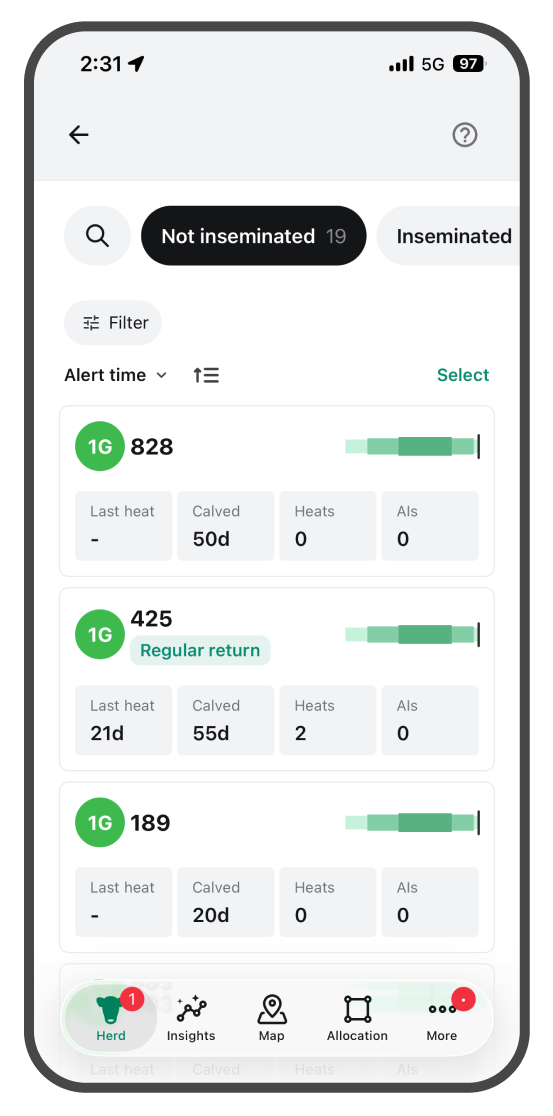
I replaced the dense table rows with scannable cards that prioritised the insemination window and heat interval, while keeping important reproductive information visible at a glance.
M
341
Regular return


Last heat
19
d
Calved
141
d
Heats
0
AIs
3
A Full Suite of Features
Operational visibility all season
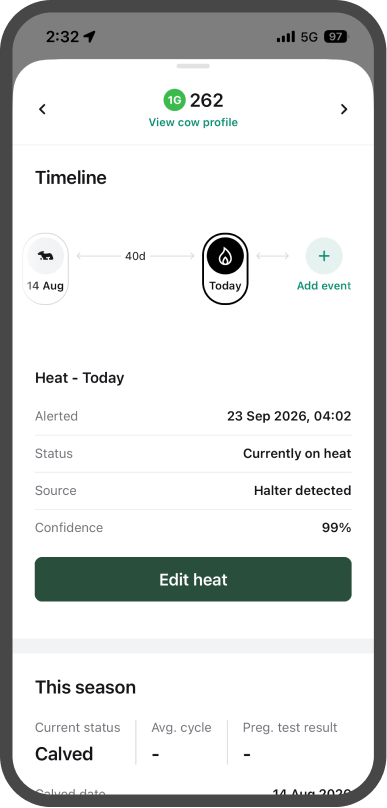
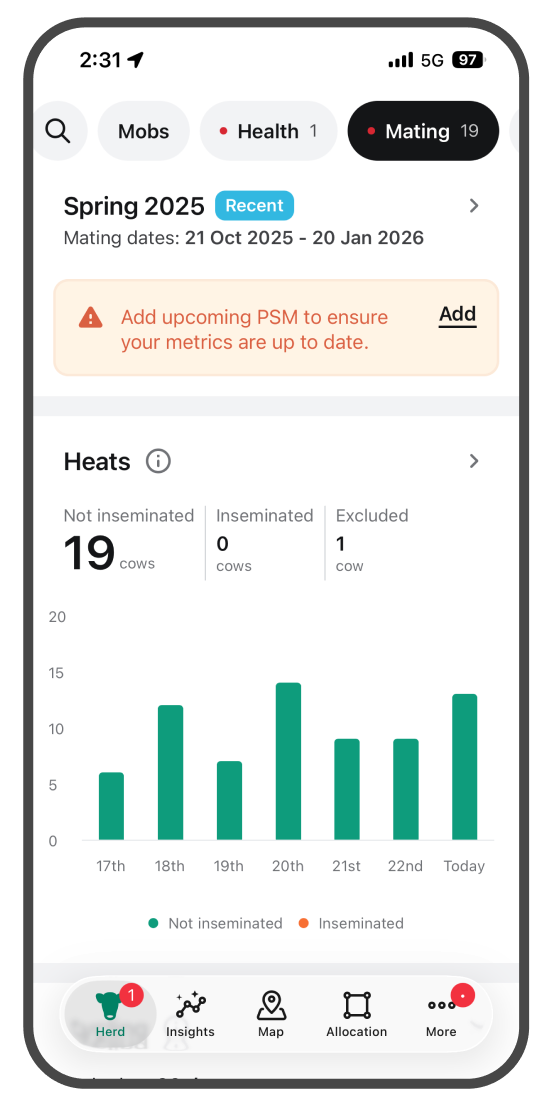
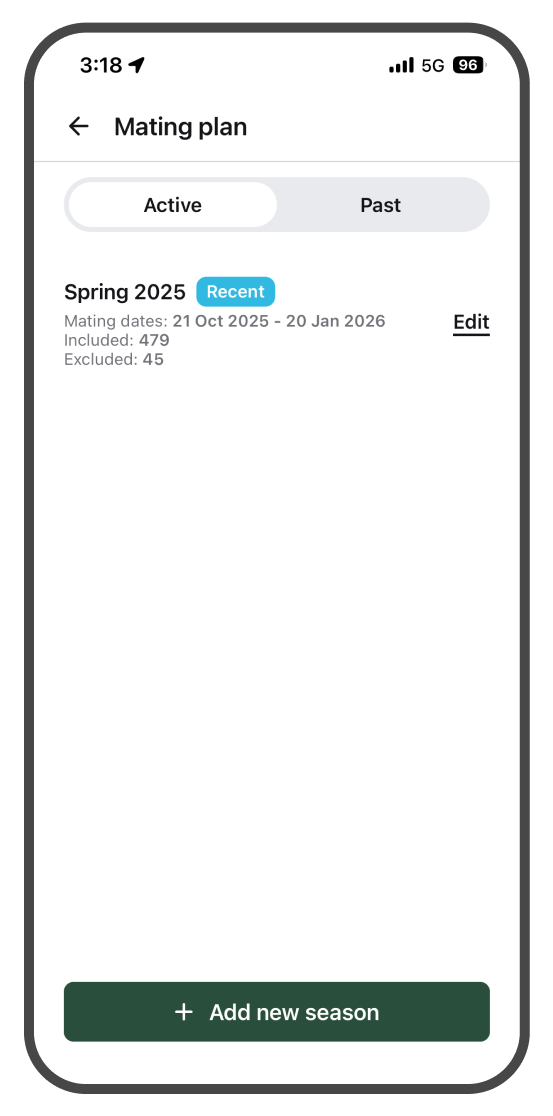
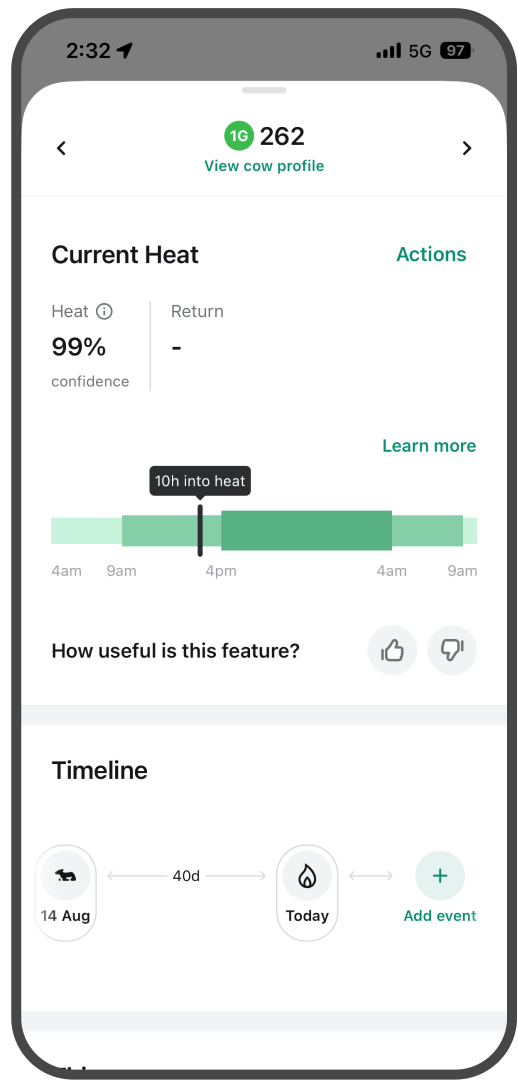
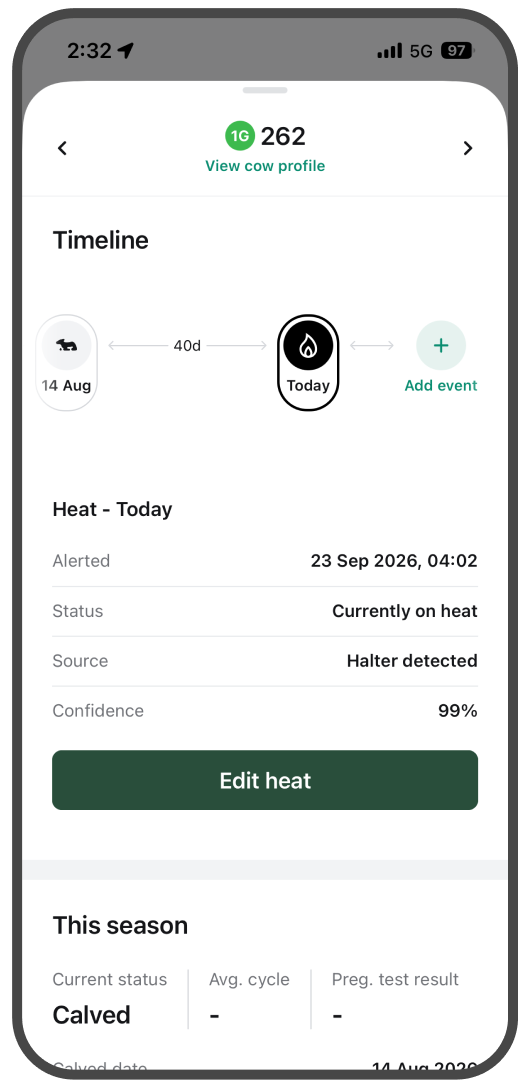
Beyond the optimum window chart, I designed a unified mating experience that gives farmers complete operational visibility throughout the season. By combining real-time heat alerts, macro performance analytics, and individual cow reproductive histories, the platform equips farmers to act on data at every stage of the breeding cycle.
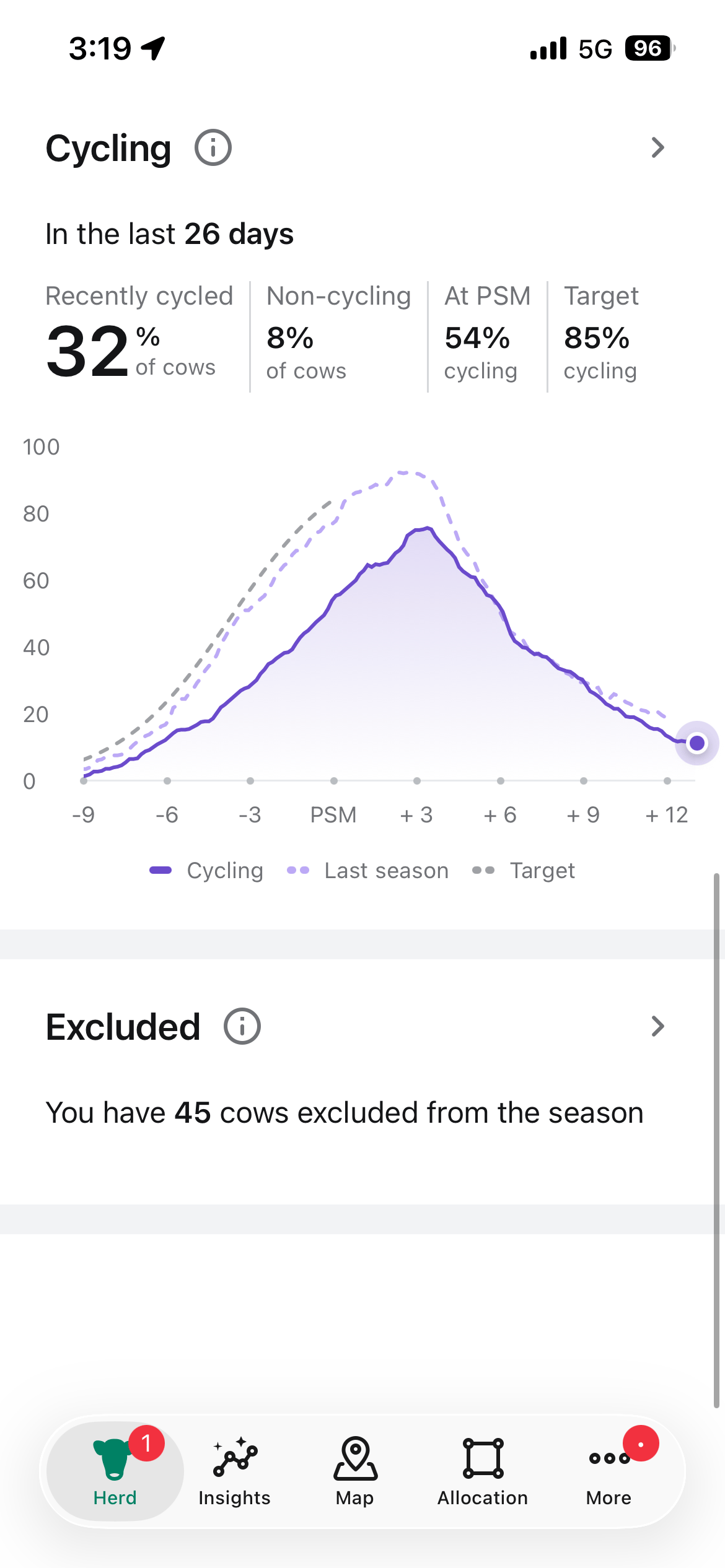
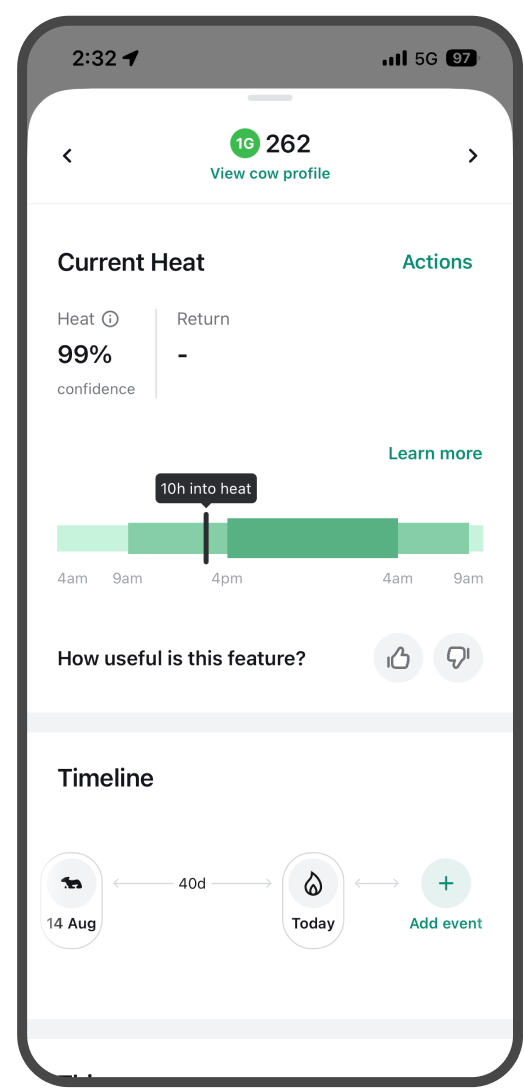
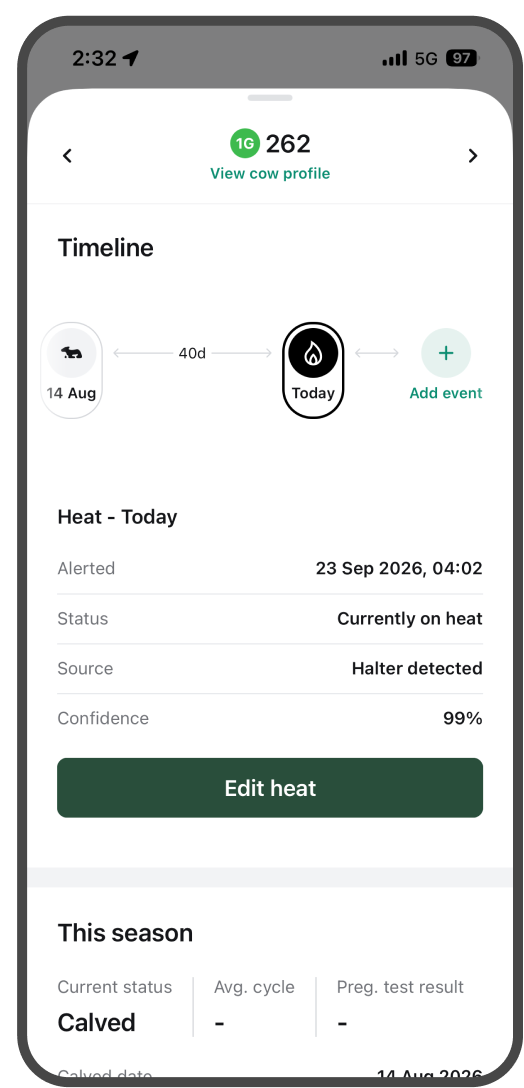
Macro performance analytics
See how the herd is cycling across the season.
Real-time heat alerts
Know the moment a cow enters heat.
Cow reproductive histories
Individual context behind every decision.
Validating the Designs
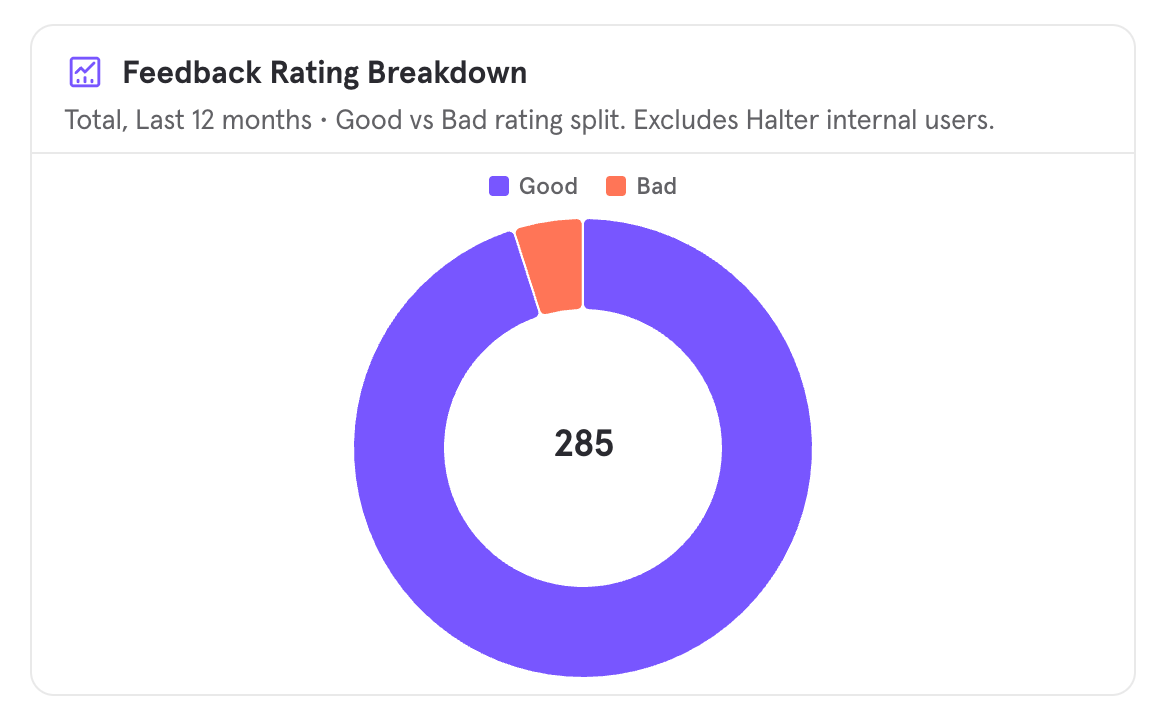
96% positive, straight from the field.
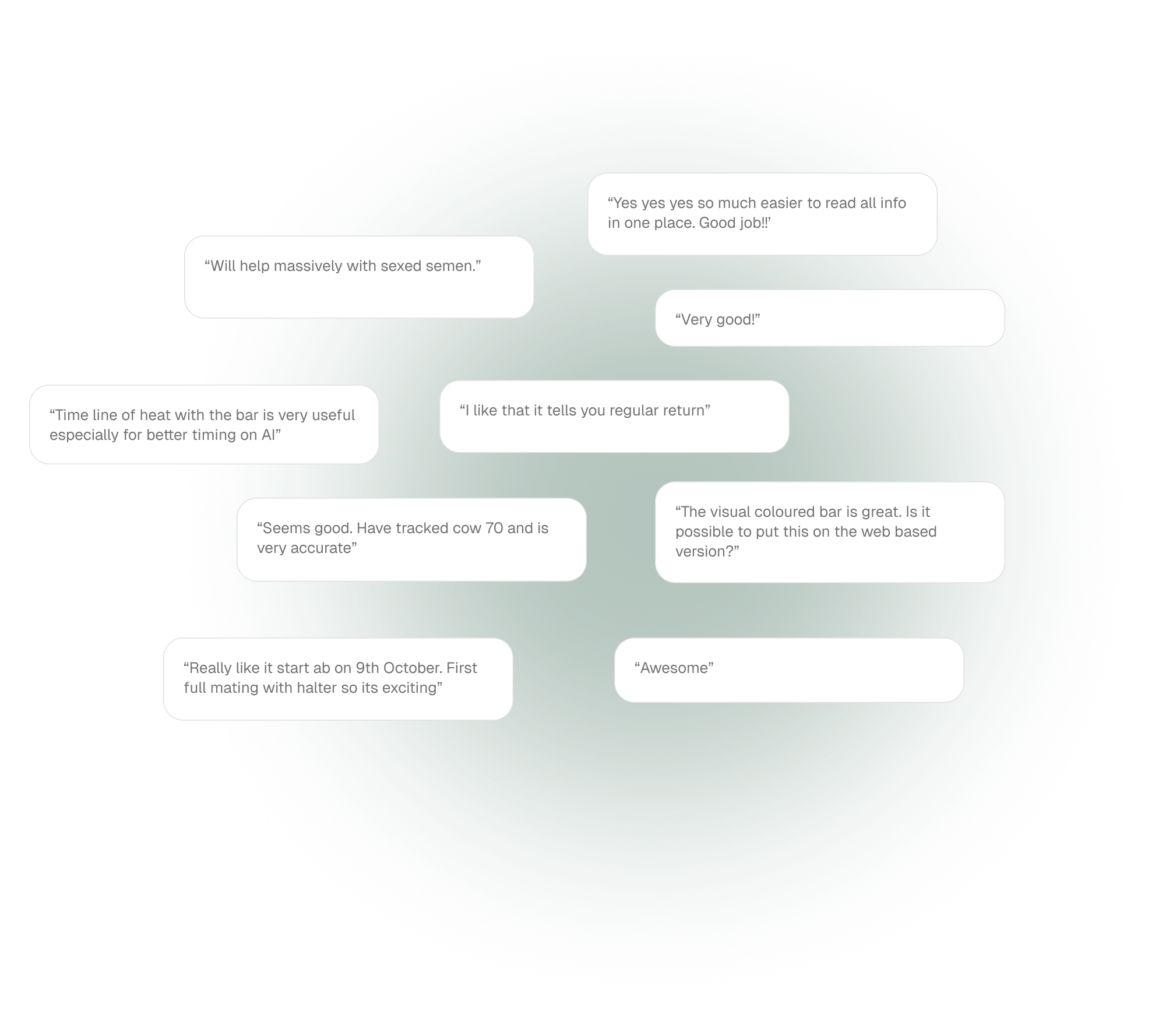
During beta, I tracked farmer feedback to understand how the redesigned experience was being received. The results were overwhelmingly positive, with 96% favourable ratings.
This feedback helped validate the direction and supported the continued rollout of the experience.
Learning from Usage
Learning from how farmers actually used it
While farmer feedback showed that the redesign was well received, I wanted to understand how it was being used in practice.
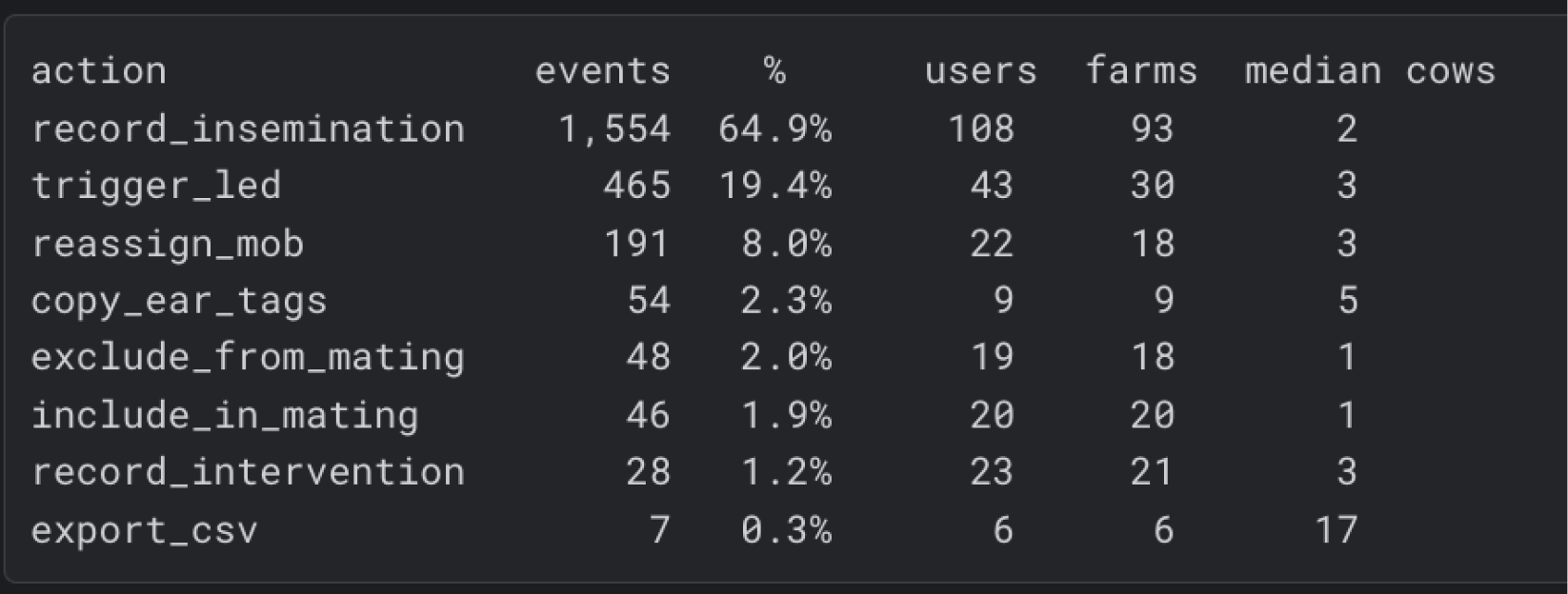
I analysed in-app events to identify which actions farmers returned to most, which features saw limited engagement, and where the experience could be simplified further.
Recording Inseminations Dominated Usage
Recording inseminations accounted for nearly 65% of the actions shown, followed by triggering collar LEDs at 19%. This reinforced how central these everyday actions were to the mating workflow.
Filtering Saw Limited Repeat Use
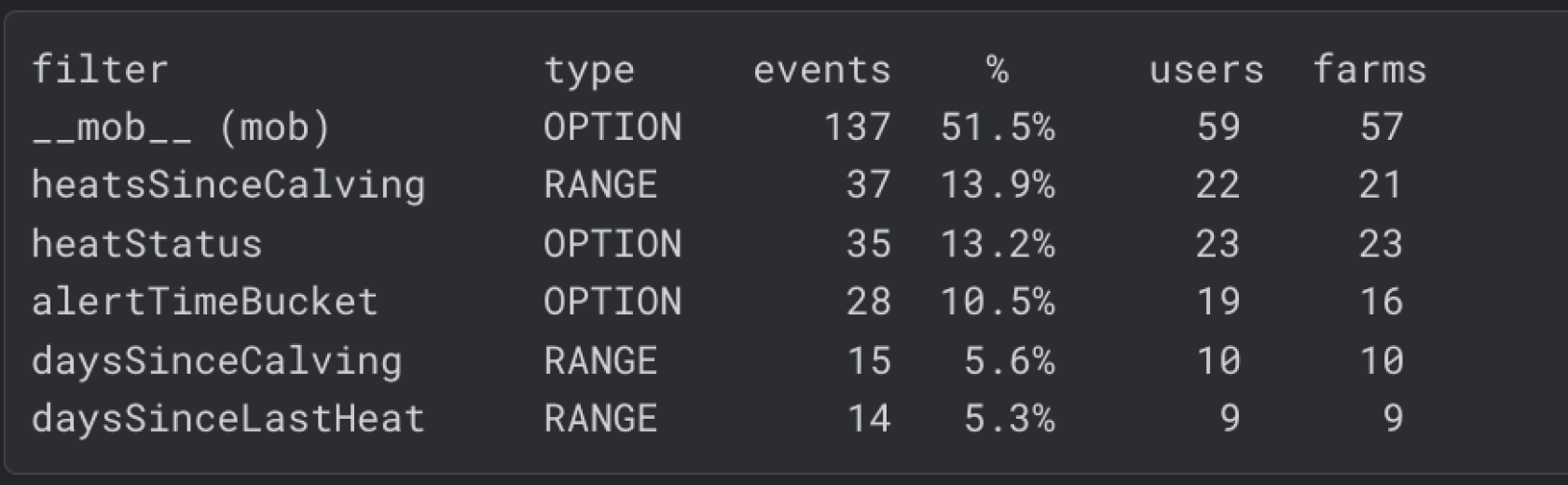
While multi-select actions were frequently used, filtering saw much less engagement. When farmers did filter, mob accounted for the majority of filter events.
Simplifying Filters
Cutting the filter down to what farmers used
Only 4.3% of adopters used filtering on three or more days, and mob accounted for most filter events. This showed an opportunity to simplify the controls around how farmers actually used the Heat List, rather than maintaining a long list of rarely used options.
Before
Filtering and sorting were handled through separate controls, each presenting a long list of options. This added unnecessary complexity to the interface and made it harder for farmers to quickly narrow down the cows they needed to focus on.
9:41


Heats

Not inseminated
Inseminated
Label

(5)
Label (2)

Status: Regular
Alert time


Select
M
341
Regular return


Last heat
19
d
Calved
141
d
Heats
0
AIs
3

Mixed age

Light
9:41
Heats

Not inseminated
Inseminated
Label

Filter
Alert time
Select
M
341
Regular return
Last heat
19
d
Calved
141
d
Heats
0
AIs
3
M
222
Regular return
Last heat
24
d
Calved
-
d
Heats
6
AIs
2
M
412
In-calf heat

Last heat
21
d
Calved
151
d
Heats
7
AIs
6
M
56
Low confidence
Last heat
25
d
Calved
134
d
Heats
5
AIs
3
Sort by
Mob
Ear tag
Last heat
Alert time

Calved
Heats
AIs
9:41
Heats
Not inseminated
Inseminated
Label

Filter
Alert time
Select
Reset all
Apply
M
341
Regular return
Last heat
19
d
Calved
141
d
Heats
0
AIs
3
M
222
Regular return
Last heat
24
d
Calved
-
d
Heats
6
AIs
2
M
412
In-calf heat
Last heat
21
d
Calved
151
d
Heats
7
AIs
6
M
56
Low confidence
Last heat
25
d
Calved
134
d
Heats
5
AIs
3
Filters
Mob

Status
Alert time
Last heat
Calved
Heats
AIs
Label
Reset all
Apply
After
I brought sorting and filtering together under a single control and reduced the available filters to those most relevant to farmers’ workflows. This removed unnecessary controls from the Heat List while keeping the options farmers needed accessible when required.
9:41
Heats


Not inseminated
Inseminated
Missed inseminations

Select
3
M
31
Heat
Reg · 21d
Calved
138d
Heats
1
AIs
0
M
341
Heat
Short · 18d
Calved
40d
Heats
1
AIs
0
M
142
Heat
In-calf
Calved
54d
Heats
2
AIs
1
M
54
Heat
Long · 27d
Calved
120d
Heats
2
AIs
1
M
512
Heat
Reg · 21d
Calved
120d
Heats
2
AIs
1
9:41
Heats
Not inseminated
Inseminated
Missed inseminations
Select
M
31
Heat
Reg · 21d
Calved
138d
Heats
1
AIs
0
M
341
Heat
Short · 18d
Calved
40d
Heats
1
AIs
0
M
142
Heat
In-calf
Calved
54d
Heats
2
AIs
1
M
54
Heat
Long · 27d
Calved
120d
Heats
2
AIs
1
M
512
Heat
Reg · 21d
Calved
120d
Heats
2
AIs
1
Sort & filter
Filter
Mob

Return interval

Labels
Sort by
Alert time

Clear
Apply
9:41
Heats


Not inseminated
Inseminated
Missed inseminations

Select
M
31
Heat
Reg · 21d
Calved
138d
Heats
1
AIs
0
M
341
Heat
Short · 18d
Calved
40d
Heats
1
AIs
0
M
142
Heat
In-calf
Calved
54d
Heats
2
AIs
1
M
54
Heat
Long · 27d
Calved
120d
Heats
2
AIs
1
M
512
Heat
Reg · 21d
Calved
120d
Heats
2
AIs
1
Sort by
Alert time

Ear tag

Mob
Bringing It All Together
Where the experience landed
The final Heat List brought together detection confidence, insemination timing and reproductive information in one place, giving farmers a clearer view of each cow without having to navigate between different screens.
9:41
Heats
Not inseminated
Inseminated
Missed inseminations
Select
M
31
Heat
Reg · 21d
Calved
138d
Heats
1
AIs
0
M
341
Heat
Short · 18d
Calved
40d
Heats
1
AIs
0
M
142
Heat
In-calf
Calved
54d
Heats
2
AIs
1
M
54
Heat
Long · 27d
Calved
120d
Heats
2
AIs
1
M
512
Heat
Reg · 21d
Calved
120d
Heats
2
AIs
1
9:41
Heats

Not inseminated
Inseminated
Missed inseminations
Select
Cow
M
31
M
341
M
142
M
54
M
31
M
2433
B
6
M
2418
C
213
S
12
Conf.
98%
85%
100%
99%
89%
100%
95%
97%
17%
15%
Heat
Reg
Reg
Reg
Short
In-calf
Reg
Reg
Long
Short
Short
AI window


Identify
See how the herd is cycling across the season.
Decide
Understand heat confidence and the recommended insemination window.
Act
Use that guidance to make timely insemination decisions.
Impact
How the experience improved
Faster daily decision making
Farmers could identify cows requiring attention without spending time cross-referencing information.
Simpler herd triage
Farmers could quickly prioritise cows for insemination and organise their daily mating activities.
More confident breeding decisions
Farmers could make better-informed insemination decisions and avoid unnecessary use of sexed semen straws.
Giving farmers the flexibility to make decisions in their own way
Impact
The results behind the redesign
25%
reduction in sexed semen usage
More targeted insemination decisions helped reduce unnecessary use of expensive sexed semen.
~$4.6k
average seasonal savings per farm
Reducing reliance on costly sexed semen helped farmers lower their breeding expenses.
96%
positive farmer feedback
Farmers responded positively to clearer heat insights and more actionable mating information, across 285 ratings.
<1%
false positives
Reliable heat detection helped farmers trust the information behind their mating decisions.
IN THE FARMERS' WORDS
“Hey Sang, just a quick message with some feedback now that we have done a couple of weeks of mating - long story short the improvements are awesome!! So much better than last year and making the daily AI routine easy!!! Thank you!”


Ryan
Kanadale Farm · 2026
“Really liking the changes to the mating list. Being able to see how confident we should be in each heat has been super helpful, especially when deciding which cows to use sexed semen on.”
Will
Wilco · 2026
Mating Insights
Machine learning
Machine Learning
Field Research
Data Visualisation
I led the end-to-end redesign of Halter’s core mating experience, working across product, ML and farmer research to turn complex heat-model data into clear, time-sensitive breeding decisions.The resulting optimum insemination window gave farmers a simple, actionable view of when to breed each cow.
Halter · 2026
The challenge
Making sense of heat signals
Halter’s smart collars detect changes in cow behaviour, but farmers still need to interpret those signals to make breeding decisions.
Open app
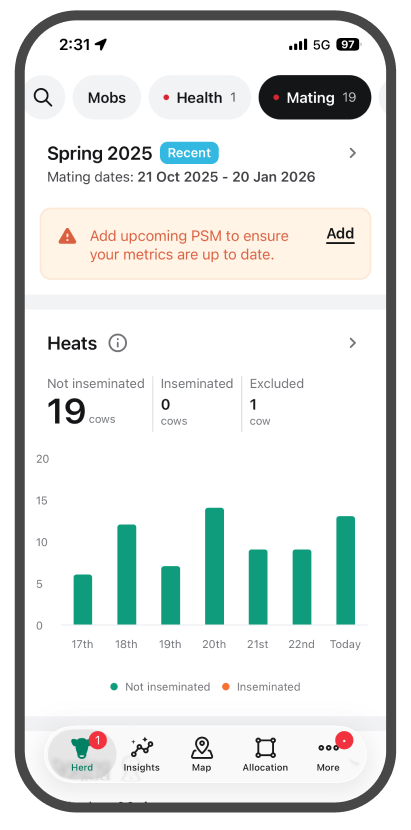
During mating season, farmers have a narrow window to identify cows on heat and decide when to inseminate.
Turning data into confidence
The challenge was translating complex heat-model data into clear, actionable information that farmers could trust in the field.
The Problem
The old Heat List made time-critical decisions harder
During peak mating season, farmers need to quickly identify cows ready for artificial insemination. However, the existing Heat List presented dense reproductive data without clearly showing when each cow should be inseminated.
Farmers had to interpret heat events and cross-reference information to determine the best time to act. The opportunity was to bring that timing guidance directly into the experience, making it easier to prioritise cows during busy mating periods.
9:41


Heats

B
34-3431

Since 4 ago

First AI

Conventional
Confidence
70%
Not submitted
7
1% of cows
Submitted
57
6% of cows

Filter
Not submitted


7 results
Peak

Pre
Pre
Pre
Pre
+ 2h
+ 12h
+ 16h
Heats
3
3
3
3
3
3
3
Last AI
21d
21d
21d
11d
21d
21d
21d
AI
1
1
1
1
1
1
1
Cow

M
2734
M
9845
M
4736
M
8734
M
5623
M
3456
M
4587
The Technology
How Halter detects heat events
Halter detects heat events by analysing continuous behavioural data captured by smart collars. Its machine-learning model identifies changes in activity associated with heat, operating at a false-positive rate of less than 1%.
This provided a reliable foundation for the redesign. My focus was on how to present these signals alongside insemination timing, so farmers could understand what the data meant for their cows.
A great detection model means little if the experience doesn’t meet farmers’ needs
Discovery & Field Research
Mapping mating season as it actually runs
I spoke directly with dairy farmers through remote interviews and on-farm visits to understand how they managed mating season. I focused on their daily routines, the decisions they needed to make, and where the existing experience fell short.
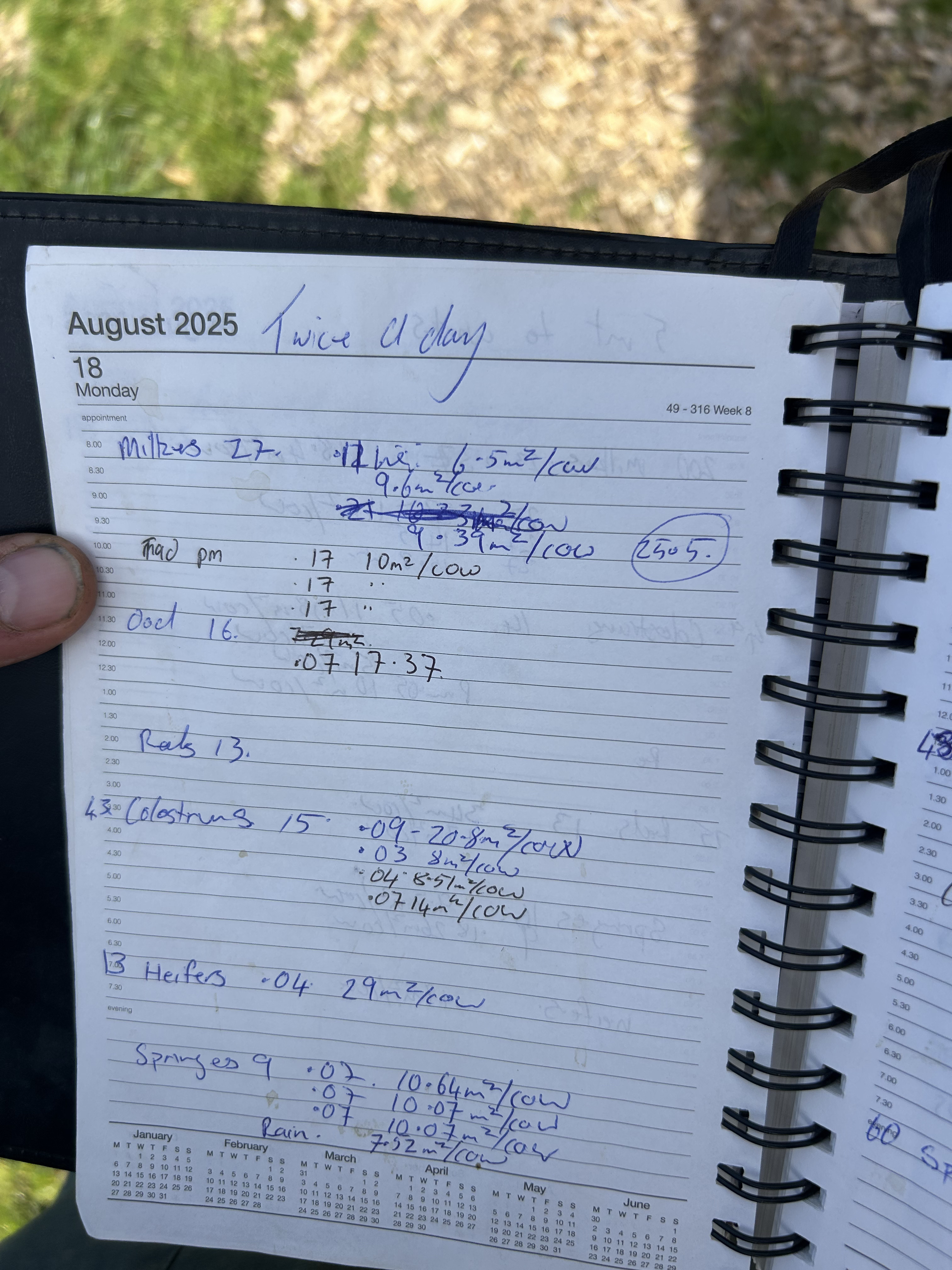
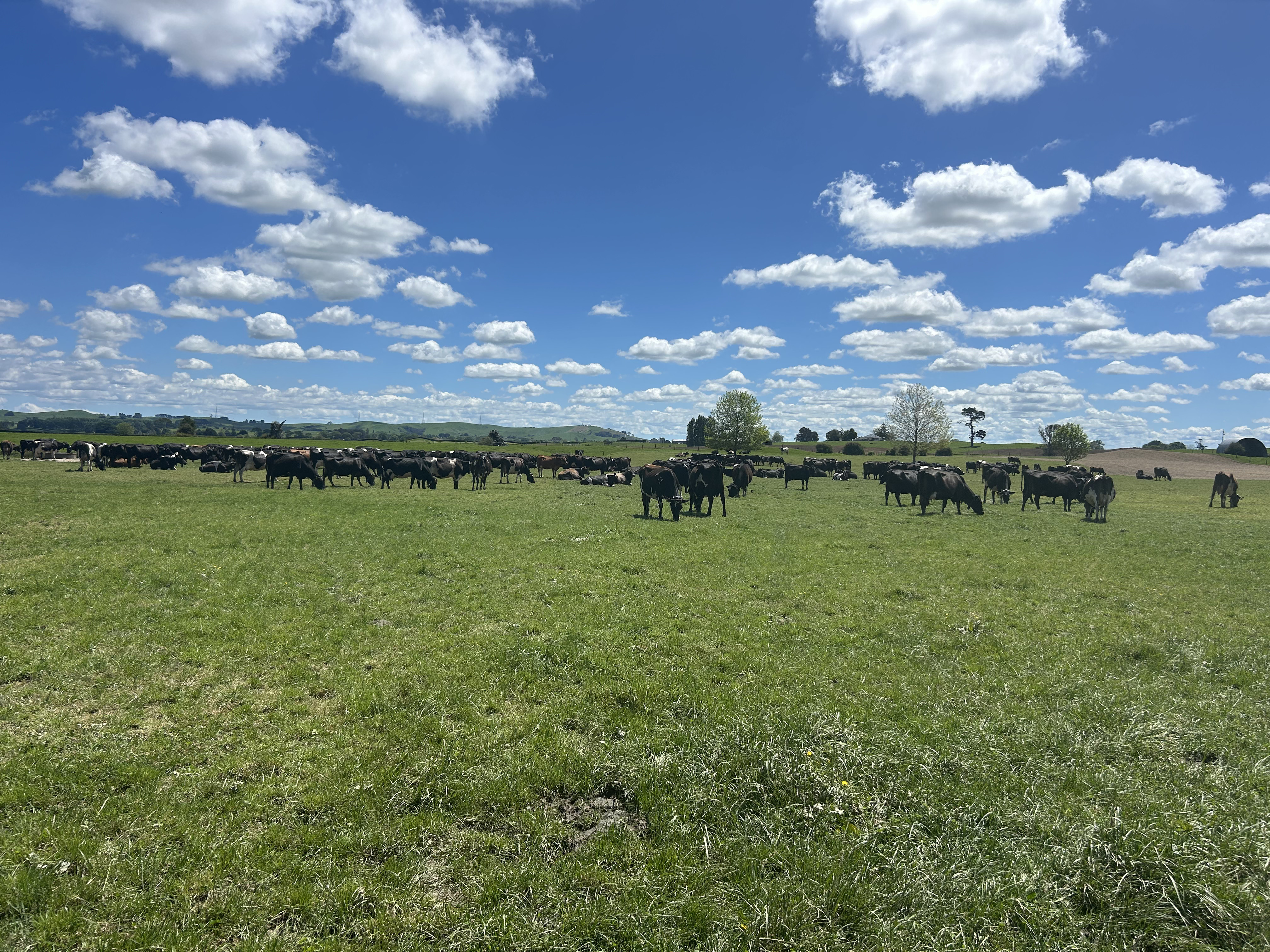
Farmers wanted more than just knowing when their cows were on heat.
They wanted to make their own decisions on when to inseminate.
Collaboration
Working with Behaviour and ML
That insight shaped my collaboration with the Behaviour and ML teams. Together, we explored how the heat model worked, what data was available, and how it could support farmers’ insemination decisions.
I used that understanding to explore different ways of visualising the insemination window, from linear progress bars to bell-curve distributions.
Cow activity
Mob avg.


Halter alert

Insemination window


0
6
12
18
24
30
36
42
48
Designs Informed by Testing
From multiple concepts to one clear bar
I tested different visualisations directly with farmers to understand which made the insemination window easiest to interpret.
Best 12 hr
Best 24 hr
Insemination window


Heat window
The horizontal timing bar emerged as the strongest direction. It made the recommended insemination window easy to identify at a glance, while still showing the broader period in which farmers could act.
Refining the Design
Refining the bar for real farm use
The bar had to show every insemination window and its likelihood of conception, while still encouraging farmers to act outside the best window when needed. Every window stays green, so none looks unsuitable. Size, not colour, tells them apart, and the optimum window is easy to spot without hiding the rest.
12pm
5pm
12am
12pm
5pm

7h
into heat

I continued refining the design through farmer feedback, sharing findings with the wider team as the design evolved. I also added clock times for each window and an “hours into heat” indicator, so farmers could see exactly where a cow was in her heat cycle without calculating the timing themselves.
Key Trade-off
Context vs. legibility in the field
The bar worked for a single cow, but farmers manage whole herds. The next challenge was the list around it: how much context to show per cow before the screen became unreadable in the field.
Peak
Pre
Pre
Pre
Heats
3
3
3
Last AI
21d
21d
21d
AI
1
1
1
Cow
M
2734
M
9845
M
4736
Before
The table showed heat counts and AI history, but not what farmers needed to decide: no optimum window, no heat interval, and no calving status.
M
341
Regular return
Last heat
19
d
Calved
141
d
Heats
0
AIs
3
After
I replaced the dense table rows with scannable cards that prioritised the insemination window and heat interval, while keeping important reproductive information visible at a glance.
A Full Suite of Features
Operational visibility all season
Beyond the optimum window chart, I designed a unified mating experience that gives farmers complete operational visibility throughout the season. By combining real-time heat alerts, macro performance analytics, and individual cow reproductive histories, the platform equips farmers to act on data at every stage of the breeding cycle.
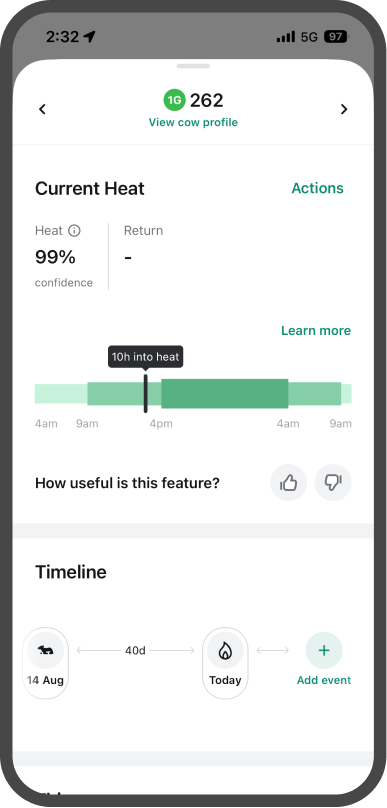
Macro performance analytics
See how the herd is cycling across the season.
Real-time heat alerts
Know the moment a cow enters heat.
Cow reproductive histories
Individual context behind every decision.
Validating the Designs
96% positive, straight from the field.
During beta, I tracked farmer feedback to understand how the redesigned experience was being received. The results were overwhelmingly positive, with 96% favourable ratings.
This feedback helped validate the direction and supported the continued rollout of the experience.
Learning from Usage
Learning from how farmers actually used it
While farmer feedback showed that the redesign was well received, I wanted to understand how it was being used in practice.
I analysed in-app events to identify which actions farmers returned to most, which features saw limited engagement, and where the experience could be simplified further.
Recording Inseminations Dominated Usage
Recording inseminations accounted for nearly 65% of the actions shown, followed by triggering collar LEDs at 19%. This reinforced how central these everyday actions were to the mating workflow.
Filtering Saw Limited Repeat Use
While multi-select actions were frequently used, filtering saw much less engagement. When farmers did filter, mob accounted for the majority of filter events.
Simplifying Filters
Cutting the filter down to what farmers used
Only 4.3% of adopters used filtering on three or more days, and mob accounted for most filter events. This showed an opportunity to simplify the controls around how farmers actually used the Heat List, rather than maintaining a long list of rarely used options.
Before
Filtering and sorting were handled through separate controls, each presenting a long list of options. This added unnecessary complexity to the interface and made it harder for farmers to quickly narrow down the cows they needed to focus on.
9:41


Heats

Not inseminated
Inseminated
Label

(5)
Label (2)

Status: Regular
Alert time


Select
M
341
Regular return


Last heat
19
d
Calved
141
d
Heats
0
AIs
3

Mixed age

Light
9:41
Heats

Not inseminated
Inseminated
Label

Filter
Alert time
Select
M
341
Regular return
Last heat
19
d
Calved
141
d
Heats
0
AIs
3
M
222
Regular return
Last heat
24
d
Calved
-
d
Heats
6
AIs
2
M
412
In-calf heat

Last heat
21
d
Calved
151
d
Heats
7
AIs
6
M
56
Low confidence
Last heat
25
d
Calved
134
d
Heats
5
AIs
3
Sort by
Mob
Ear tag
Last heat
Alert time

Calved
Heats
AIs
9:41
Heats
Not inseminated
Inseminated
Label

Filter
Alert time
Select
Reset all
Apply
M
341
Regular return
Last heat
19
d
Calved
141
d
Heats
0
AIs
3
M
222
Regular return
Last heat
24
d
Calved
-
d
Heats
6
AIs
2
M
412
In-calf heat
Last heat
21
d
Calved
151
d
Heats
7
AIs
6
M
56
Low confidence
Last heat
25
d
Calved
134
d
Heats
5
AIs
3
Filters
Mob

Status
Alert time
Last heat
Calved
Heats
AIs
Label
Reset all
Apply
After
I brought sorting and filtering together under a single control and reduced the available filters to those most relevant to farmers’ workflows. This removed unnecessary controls from the Heat List while keeping the options farmers needed accessible when required.
9:41
Heats


Not inseminated
Inseminated
Missed inseminations

Select
3
M
31
Heat
Reg · 21d
Calved
138d
Heats
1
AIs
0
M
341
Heat
Short · 18d
Calved
40d
Heats
1
AIs
0
M
142
Heat
In-calf
Calved
54d
Heats
2
AIs
1
M
54
Heat
Long · 27d
Calved
120d
Heats
2
AIs
1
M
512
Heat
Reg · 21d
Calved
120d
Heats
2
AIs
1
9:41
Heats
Not inseminated
Inseminated
Missed inseminations
Select
M
31
Heat
Reg · 21d
Calved
138d
Heats
1
AIs
0
M
341
Heat
Short · 18d
Calved
40d
Heats
1
AIs
0
M
142
Heat
In-calf
Calved
54d
Heats
2
AIs
1
M
54
Heat
Long · 27d
Calved
120d
Heats
2
AIs
1
M
512
Heat
Reg · 21d
Calved
120d
Heats
2
AIs
1
Sort & filter
Filter
Mob

Return interval

Labels
Sort by
Alert time

Clear
Apply
9:41
Heats

Not inseminated
Inseminated
Missed inseminations

Select
M
31
Heat
Reg · 21d
Calved
138d
Heats
1
AIs
0
M
341
Heat
Short · 18d
Calved
40d
Heats
1
AIs
0
M
142
Heat
In-calf
Calved
54d
Heats
2
AIs
1
M
54
Heat
Long · 27d
Calved
120d
Heats
2
AIs
1
M
512
Heat
Reg · 21d
Calved
120d
Heats
2
AIs
1
Sort by
Alert time

Ear tag

Mob
Bringing It All Together
Where the experience landed
The final Heat List brought together detection confidence, insemination timing and reproductive information in one place, giving farmers a clearer view of each cow without having to navigate between different screens.
9:41
Heats
Not inseminated
Inseminated
Missed inseminations
Select
M
31
Heat
Reg · 21d
Calved
138d
Heats
1
AIs
0
M
341
Heat
Short · 18d
Calved
40d
Heats
1
AIs
0
M
142
Heat
In-calf
Calved
54d
Heats
2
AIs
1
M
54
Heat
Long · 27d
Calved
120d
Heats
2
AIs
1
M
512
Heat
Reg · 21d
Calved
120d
Heats
2
AIs
1
9:41
Heats

Not inseminated
Inseminated
Missed inseminations
Select
Cow
M
31
M
341
M
142
M
54
M
31
M
2433
B
6
M
2418
C
213
S
12
Conf.
98%
85%
100%
99%
89%
100%
95%
97%
17%
15%
Heat
Reg
Reg
Reg
Short
In-calf
Reg
Reg
Long
Short
Short
AI window
Identify
See how the herd is cycling across the season.
Decide
Understand heat confidence and the recommended insemination window.
Act
Use that guidance to make timely insemination decisions.
Impact
How the experience improved
Faster daily decision making
Farmers could identify cows requiring attention without spending time cross-referencing information.
Simpler herd triage
Farmers could quickly prioritise cows for insemination and organise their daily mating activities.
More confident breeding decisions
Farmers could make better-informed insemination decisions and avoid unnecessary use of sexed semen straws.
Giving farmers the flexibility to make decisions in their own way
Impact
The results behind the redesign
25%
reduction in sexed semen usage
More targeted insemination decisions helped reduce unnecessary use of expensive sexed semen.
~$4.6k
average seasonal savings per farm
Reducing reliance on costly sexed semen helped farmers lower their breeding expenses.
96%
positive farmer feedback
Farmers responded positively to clearer heat insights and more actionable mating information, across 285 ratings.
<1%
false positives
Reliable heat detection helped farmers trust the information behind their mating decisions.
IN THE FARMERS' WORDS
“Hey Sang, just a quick message with some feedback now that we have done a couple of weeks of mating - long story short the improvements are awesome!! So much better than last year and making the daily AI routine easy!!! Thank you!”

Ryan
Kanadale Farm · 2026
“Really liking the changes to the mating list. Being able to see how confident we should be in each heat has been super helpful, especially when deciding which cows to use sexed semen on.”
Will
Wilco · 2026
Mating Insights
Machine learning
Hardware
Field Research
Data Visualisation
I led the end-to-end redesign of Halter's core mating experience, working across product, ML and farmer research to turn complex heat-model data into clear, time-sensitive breeding decisions.
Halter · 2026
The challenge
Making sense of heat signals
Halter’s smart collars detect changes in cow behaviour, but farmers still need to interpret those signals to make breeding decisions.
Time-critical decisions
During mating season, farmers have a narrow window to identify cows on heat and decide when to inseminate.
Turning data into confidence
The challenge was translating complex heat-model data into clear, actionable information that farmers could trust in the field.
The Problem
The old Heat List made time-critical decisions harder
During peak mating season, farmers need to quickly identify cows ready for artificial insemination. However, the existing Heat List presented dense reproductive data without clearly showing when each cow should be inseminated.
Farmers had to interpret heat events and cross-reference information to determine the best time to act. The opportunity was to bring that timing guidance directly into the experience, making it easier to prioritise cows during busy mating periods.
9:41


Heats

B
34-3431

Since 4 ago

First AI

Conventional
Confidence
70%
Not submitted
7
1% of cows
Submitted
57
6% of cows

Filter
Not submitted


7 results
Peak

Pre
Pre
Pre
Pre
+ 2h
+ 12h
+ 16h
Heats
3
3
3
3
3
3
3
Last AI
21d
21d
21d
11d
21d
21d
21d
AI
1
1
1
1
1
1
1
Cow

M
2734
M
9845
M
4736
M
8734
M
5623
M
3456
M
4587
The Technology
How Halter detects heat events
Halter detects heat events by analysing continuous behavioural data captured by smart collars. Its machine-learning model identifies changes in activity associated with heat, operating at a false-positive rate of less than 1%.
This provided a reliable foundation for the redesign. My focus was on how to present these signals alongside insemination timing, so farmers could understand what the data meant for their cows.
A great detection model means little if the experience doesn’t meet farmers’ needs
Discovery & Field Research
Mapping mating season as it actually runs
I spoke directly with dairy farmers through remote interviews and on-farm visits to understand how they managed mating season. I focused on their daily routines, the decisions they needed to make, and where the existing experience fell short.
Farmers wanted more than just knowing when their cows were on heat.
They wanted to make their own decisions on when to inseminate.
Collaboration
Working with Behaviour and ML
That insight shaped my collaboration with the Behaviour and ML teams. Together, we explored how the heat model worked, what data was available, and how it could support farmers’ insemination decisions.
I used that understanding to explore different ways of visualising the insemination window, from linear progress bars to bell-curve distributions.
Cow activity
Mob avg.


Halter alert

Insemination window


0
6
12
18
24
30
36
42
48
Designs Informed by Testing
From multiple concepts to one clear bar
I tested different visualisations directly with farmers to understand which made the insemination window easiest to interpret.
Best 12 hr
Best 24 hr
Insemination window


Heat window
The horizontal timing bar emerged as the strongest direction. It made the recommended insemination window easy to identify at a glance, while still showing the broader period in which farmers could act.
Refining the Design
Refining the bar for real farm use
The bar had to show every insemination window and its likelihood of conception, while still encouraging farmers to act outside the best window when needed. Every window stays green, so none looks unsuitable. Size, not colour, tells them apart, and the optimum window is easy to spot without hiding the rest.
12pm
5pm
12am
12pm
5pm

7h
into heat

I continued refining the design through farmer feedback, sharing findings with the wider team as the design evolved. I also added clock times for each window and an “hours into heat” indicator, so farmers could see exactly where a cow was in her heat cycle without calculating the timing themselves.
Key Trade-off
Context vs. legibility in the field
The bar worked for a single cow, but farmers manage whole herds. The next challenge was the list around it: how much context to show per cow before the screen became unreadable in the field.
Peak
Pre
Pre
Pre
Heats
3
3
3
Last AI
21d
21d
21d
AI
1
1
1
Cow
M
2734
M
9845
M
4736
Before
The table showed heat counts and AI history, but not what farmers needed to decide: no optimum window, no heat interval, and no calving status.
M
341
Regular return
Last heat
19
d
Calved
141
d
Heats
0
AIs
3
After
I replaced the dense table rows with scannable cards that prioritised the insemination window and heat interval, while keeping important reproductive information visible at a glance.
A Full Suite of Features
Operational visibility all season
Beyond the optimum window chart, I designed a unified mating experience that gives farmers complete operational visibility throughout the season. By combining real-time heat alerts, macro performance analytics, and individual cow reproductive histories, the platform equips farmers to act on data at every stage of the breeding cycle.
Macro performance analytics
See how the herd is cycling across the season.
Real-time heat alerts
Know the moment a cow enters heat.
Cow reproductive histories
Individual context behind every decision.
Validating the Designs
96% positive, straight from the field.
During beta, I tracked farmer feedback to understand how the redesigned experience was being received. The results were overwhelmingly positive, with 96% favourable ratings.
This feedback helped validate the direction and supported the continued rollout of the experience.
Learning from Usage
Learning from how farmers actually used it
While farmer feedback showed that the redesign was well received, I wanted to understand how it was being used in practice.
I analysed in-app events to identify which actions farmers returned to most, which features saw limited engagement, and where the experience could be simplified further.
Recording Inseminations Dominated Usage
Recording inseminations accounted for nearly 65% of the actions shown, followed by triggering collar LEDs at 19%. This reinforced how central these everyday actions were to the mating workflow.
Filtering Saw Limited Repeat Use
While multi-select actions were frequently used, filtering saw much less engagement. When farmers did filter, mob accounted for the majority of filter events.
Simplifying Filters
Cutting the filter down to what farmers used
Only 4.3% of adopters used filtering on three or more days, and mob accounted for most filter events. This showed an opportunity to simplify the controls around how farmers actually used the Heat List, rather than maintaining a long list of rarely used options.
Before
Filtering and sorting were handled through separate controls, each presenting a long list of options. This added unnecessary complexity to the interface and made it harder for farmers to quickly narrow down the cows they needed to focus on.
9:41
Heats

Not inseminated
Inseminated
Label
(5)
Label (2)
Status: Regular
Alert time
Select
M
341
Regular return
Last heat
19
d
Calved
141
d
Heats
0
AIs
3
Mixed age
Light
9:41
Heats
Not inseminated
Inseminated
Label
Filter
Alert time
Select
M
341
Regular return
Last heat
19
d
Calved
141
d
Heats
0
AIs
3
M
222
Regular return
Last heat
24
d
Calved
-
d
Heats
6
AIs
2
M
412
In-calf heat
Last heat
21
d
Calved
151
d
Heats
7
AIs
6
M
56
Low confidence
Last heat
25
d
Calved
134
d
Heats
5
AIs
3
Sort by
Mob
Ear tag
Last heat
Alert time
Calved
Heats
AIs
9:41
Heats
Not inseminated
Inseminated
Label
Filter
Alert time
Select
Reset all
Apply
M
341
Regular return
Last heat
19
d
Calved
141
d
Heats
0
AIs
3
M
222
Regular return
Last heat
24
d
Calved
-
d
Heats
6
AIs
2
M
412
In-calf heat
Last heat
21
d
Calved
151
d
Heats
7
AIs
6
M
56
Low confidence
Last heat
25
d
Calved
134
d
Heats
5
AIs
3
Filters
Mob
Status
Alert time
Last heat
Calved
Heats
AIs
Label
Reset all
Apply
After
I brought sorting and filtering together under a single control and reduced the available filters to those most relevant to farmers’ workflows. This removed unnecessary controls from the Heat List while keeping the options farmers needed accessible when required.
9:41
Heats
Not inseminated
Inseminated
Missed inseminations
Select
3
M
31
Heat
Reg · 21d
Calved
138d
Heats
1
AIs
0
M
341
Heat
Short · 18d
Calved
40d
Heats
1
AIs
0
M
142
Heat
In-calf
Calved
54d
Heats
2
AIs
1
M
54
Heat
Long · 27d
Calved
120d
Heats
2
AIs
1
M
512
Heat
Reg · 21d
Calved
120d
Heats
2
AIs
1
9:41
Heats
Not inseminated
Inseminated
Missed inseminations
Select
M
31
Heat
Reg · 21d
Calved
138d
Heats
1
AIs
0
M
341
Heat
Short · 18d
Calved
40d
Heats
1
AIs
0
M
142
Heat
In-calf
Calved
54d
Heats
2
AIs
1
M
54
Heat
Long · 27d
Calved
120d
Heats
2
AIs
1
M
512
Heat
Reg · 21d
Calved
120d
Heats
2
AIs
1
Sort & filter
Filter
Mob
Return interval
Labels
Sort by
Alert time
Clear
Apply
9:41
Heats

Not inseminated
Inseminated
Missed inseminations
Select
M
31
Heat
Reg · 21d
Calved
138d
Heats
1
AIs
0
M
341
Heat
Short · 18d
Calved
40d
Heats
1
AIs
0
M
142
Heat
In-calf
Calved
54d
Heats
2
AIs
1
M
54
Heat
Long · 27d
Calved
120d
Heats
2
AIs
1
M
512
Heat
Reg · 21d
Calved
120d
Heats
2
AIs
1
Sort by
Alert time

Ear tag
Mob
Bringing It All Together
Where the experience landed
The final Heat List brought together detection confidence, insemination timing and reproductive information in one place, giving farmers a clearer view of each cow without having to navigate between different screens.
9:41
Heats
Not inseminated
Inseminated
Missed inseminations
Select
M
31
Heat
Reg · 21d
Calved
138d
Heats
1
AIs
0
M
341
Heat
Short · 18d
Calved
40d
Heats
1
AIs
0
M
142
Heat
In-calf
Calved
54d
Heats
2
AIs
1
M
54
Heat
Long · 27d
Calved
120d
Heats
2
AIs
1
M
512
Heat
Reg · 21d
Calved
120d
Heats
2
AIs
1
9:41
Heats
Not inseminated
Inseminated
Missed inseminations
Select
Cow
M
31
M
341
M
142
M
54
M
31
M
2433
B
6
M
2418
C
213
S
12
Conf.
98%
85%
100%
99%
89%
100%
95%
97%
17%
15%
Heat
Reg
Reg
Reg
Short
In-calf
Reg
Reg
Long
Short
Short
AI window
Identify
See which cows are on heat and need attention.
Decide
Understand heat confidence and the recommended insemination window.
Act
Use that guidance to make timely insemination decisions.
Impact
How the experience improved
Faster daily decision making
Farmers could identify cows requiring attention without spending time cross-referencing information.
Simpler herd triage
Farmers could quickly prioritise cows for insemination and organise their daily mating activities.
More confident breeding decisions
Farmers could make better-informed insemination decisions and avoid unnecessary use of sexed semen straws.
Giving farmers the flexibility to make decisions in their own way
Impact
The results behind the redesign
25%
reduction in sexed semen usage
More targeted insemination decisions helped reduce unnecessary use of expensive sexed semen.
~$4.6k
average seasonal savings per farm
Reducing reliance on costly sexed semen helped farmers lower their breeding expenses.
96%
positive farmer feedback
Farmers responded positively to clearer heat insights and more actionable mating information, across 285 ratings.
<1%
false positives
Reliable heat detection helped farmers trust the information behind their mating decisions.
IN THE FARMERS' WORDS
“Hey Sang, just a quick message with some feedback now that we have done a couple of weeks of mating - long story short the improvements are awesome!! So much better than last year and making the daily AI routine easy!!! Thank you!”

Ryan
Kanadale Farm · 2026
“Really liking the changes to the mating list. Being able to see how confident we should be in each heat has been super helpful, especially when deciding which cows to use sexed semen on.”
Will
Wilco · 2026